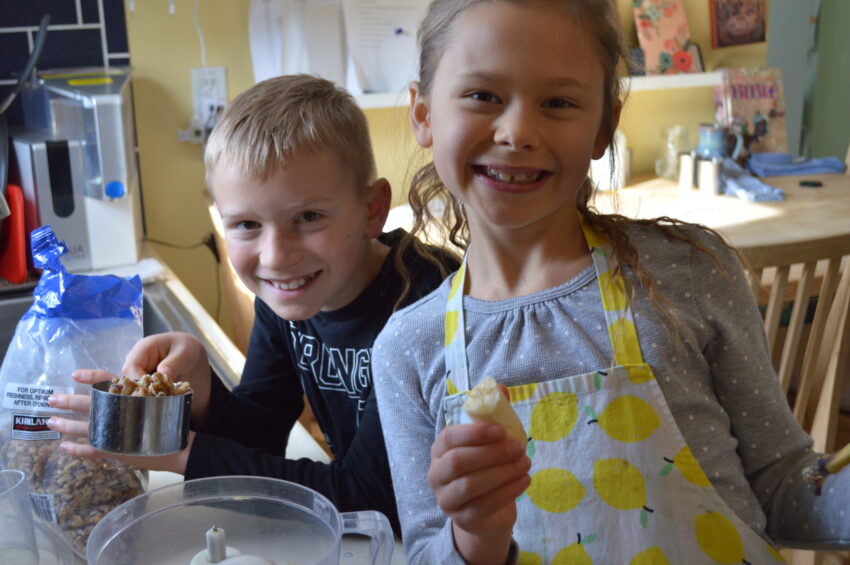
The other day my 10-year-old whispered across the table to me as we were finishing lunch, “We should make a surprise for Dad and Lily.” My husband Evan and 7-year-old Lily were packing up to go to an indoor soccer game.
After they left, I said to Jackson, “What do you think we should do for our surprise?”
“Bake banana bread,” he said.
“Ok,” I said knowing he had recently seen me put an over ripe peeled banana into a bag in the freezer, “What do you think is in banana bread.”
“Uhhh, bananas?” he said, “And bread… but we don’t have any bread.” We almost never have bread in the house. Occasionally, we buy gluten-free bread when we are on vacation. Although we had some for company over winter break, we used it up the week before.
I said, “You make the bread part, you don’t need other bread.”
“Oh, ok. Bananas and eggs?” he guessed again.
I nodded, “And?”
“Some small stuff from there,” he said, waving vaguely at the pantry. I filled him in on the other ingredients: ground walnuts, cassava flour, coconut flour, sugar, vanilla, butter, baking soda, salt, cinnamon, ginger, and dark chocolate (See full recipe below).
“Let’s do it!’ Jackson said and hopped off his chair ready to begin.
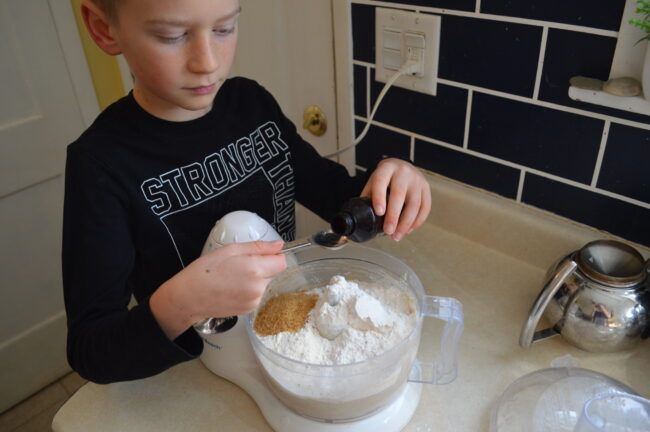
Banana bread was the first recipe I remember making in middle school Home Ec, and it is very forgiving. Jackson and I had a lovely afternoon of the two of us baking.
My younger daughter, Lily, is more of a cooking enthusiast, often asking me if she can help. But Jackson doesn’t like to be left out, and knowing his younger sister could do it makes him more confident, and recently he’s been asking to help more often. Honestly, cooking with both kids is pretty chaotic, and I prefer one-on-one, but I have, over the years, come up with some ways of cooking with kids that are more enjoyable.
Cooking with children can be more fun if you expect a little chaos, have the right tools, find a balance between mess and experimentation, and remember that what kids think is important is different from what you think is important. Kids tend to want to do as much dumping, mixing, and tasting sweet things as possible. Parents tend to want to feel connected and minimize the mess and chaos. Slowly over time, the two sets of expectations will get closer, and the kids will even learn how to clean up after themselves!
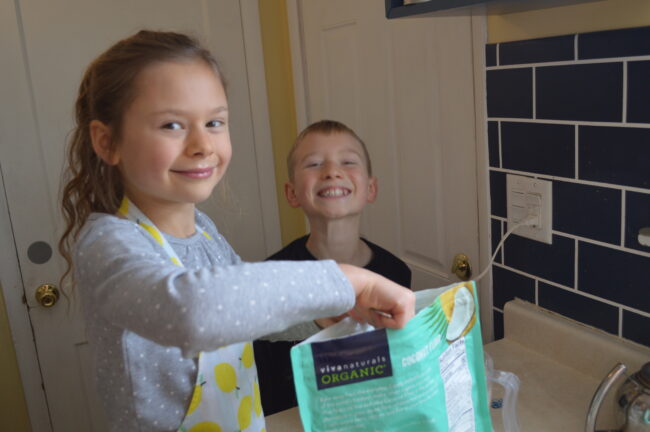
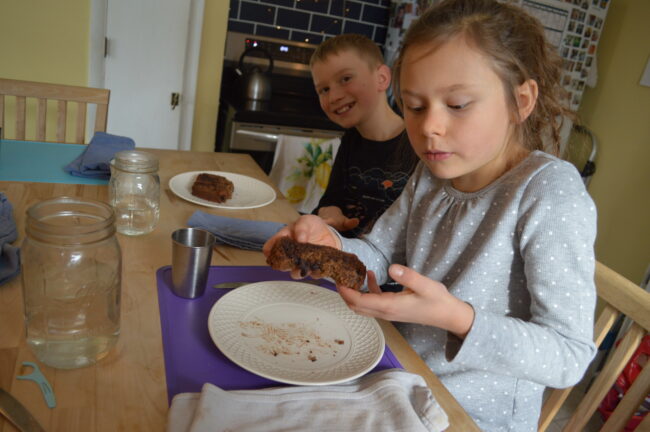
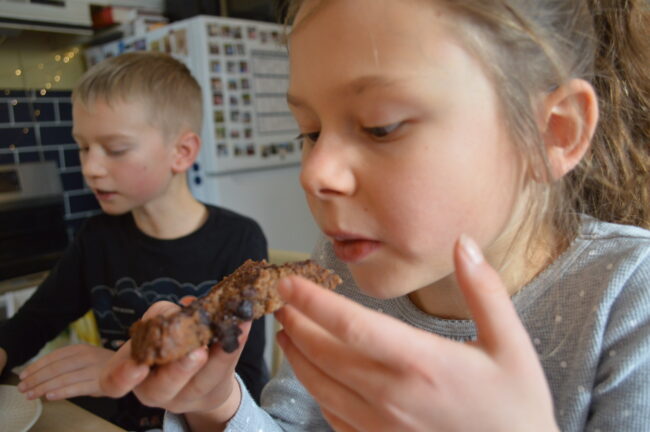
The next weekend, we realized that it was the 10th anniversary of Jackson’s baptism. To celebrate, Jackson, Lily, and I made a second batch of banana bread. (And I took pictures this time.) Since Jackson and I had just made it, it went much smoother. The kids were so happy to grab their own recipe cards and read the recipe aloud from them.
8 Tips for Cooking and Baking with Children
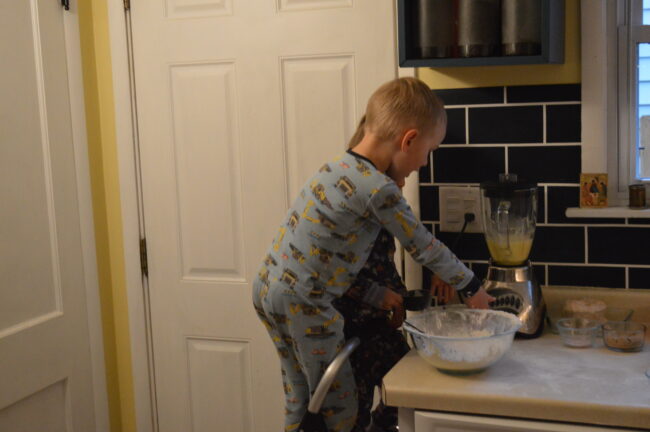
#1) Dramatically Lower Your Expectations
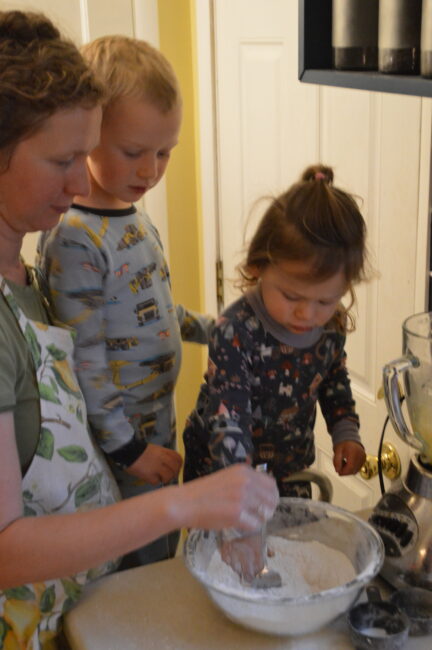
Cooking with toddlers is insanity. (But so cute! Look at that picture!) Twice the time, twice the mess. That’s ok. You’re playing the long game. Let them dump a few things in. They don’t have to learn how to do everything at age 4. Expect it to be messy and stressful. There will be a couple of sweet moments. That’s a win. Don’t expect it to be a hallmark commercial from beginning to end.
#2) Egg Cracking= Plate + Bowl.
Cooking with children is better if you are relaxed, and they have the freedom to try something. So mess management is key. For eggs, put a plate underneath a smaller bowl for your kids to crack eggs into. (Bonus if you have a second bowl for the shells to go into if the garbage is too far away.)
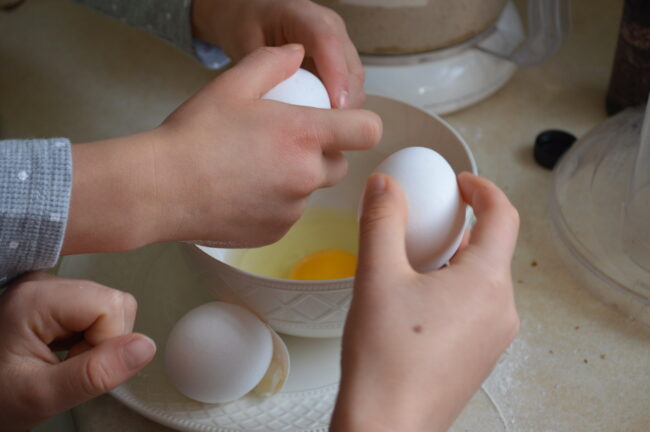
That way, the egg will just slide down onto the plate if they don’t get it into the bowl properly, and you can relax. Teach them the trick of using half an egg shell to fish out bits of broken shell from the bowl. Then dump the eggs into your batter slowly, and often the little egg bits will be left at the bottom.
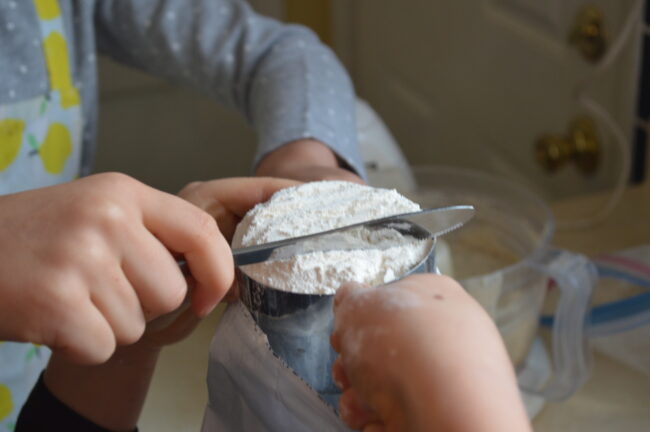
#3) Use smaller measuring cups.
Cooking with kids is better if they aren’t bickering about who gets to do what. Kids love to measure. If you have two kids, they both will want to measure and dump. They will want it to be “fair” and to dump the same number of things. If you need a cup of flour, try using a 1/2 (or even a 1/4!) cup and letting each kid do half. It is slower and not important to adults, but try to remember that this is one of the most important and fun parts of cooking for kids! Lily is also crazy about using a knife to level dry goods. (Which I admit, is oddly satisfying.)
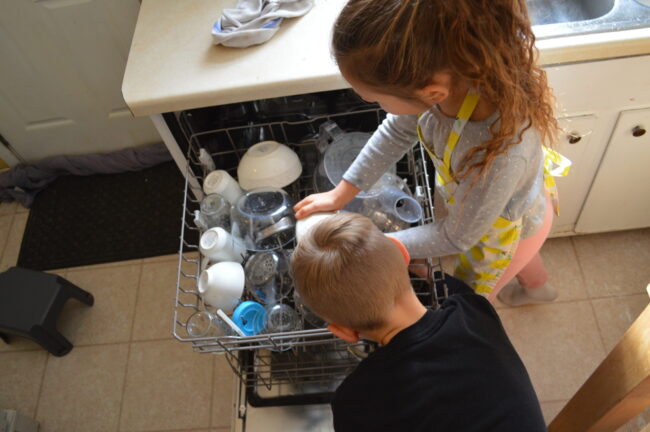
#4) Choose what parts to do together. (You don’t have to do everything!).
Cooking has many steps. There is the preparation. You need to pick the recipe, identify which ingredients you have and need, purchase needed ingredients, prepare the cooking space and tools (clear counters, take out cutting boards, food processors, bowls, cookie sheets), and ingredients. (This is the French idea of mise en place “everything in its place.” Your kids may spend a lot of time in the kitchen and not know where things are in the pantry, especially if the location of that thing involves a step stool and moving other things out of the way.)
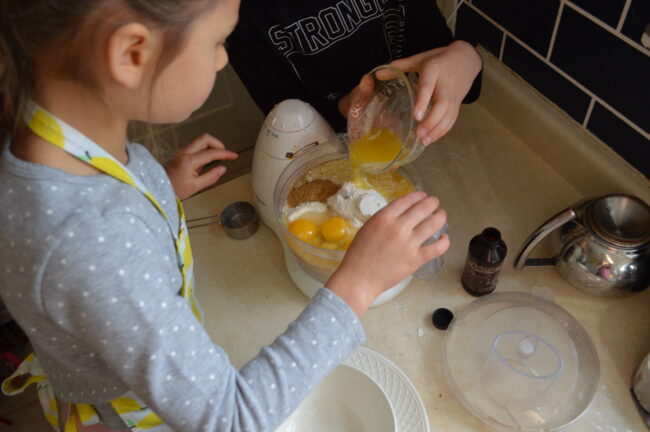
But when you cook with children, you can choose to prep and clean up by yourself if you want. Or you can slow down and do it all together. You can have them attempt to wash up and put things in the dishwasher, knowing you’ll have to redo half of it. That’s ok. You do not have to teach them everything the first time you cook together! Slowly let them do more of it as they grow. Remember, making messes and mistakes and learning how to clean up after them is a major part of cooking. (And life.)
My mother had a Home Ec teacher who used to measure all her dry ingredients out the night before in separate bowls and put them on a tray. Sometimes when my mom cooks with my kids, that is the way she does it. (It does take a great deal of dishes or pryex ramekins, but it is fun for the kids.) I’ve seen Montessori schools prep cooking that way as well. You can involve the kids in the prep, or you can peacefully do that part, invite the kids in for the dumping, and then clean up without them. Or you can let them splash around a soapy sink, “cleaning” a bowl for 10 minutes.
The main thing is cooking has lots of parts, and you don’t have do ALL of them with the kids every time. It’s ok to let them do various parts depending on the day and the recipe and your own bandwidth for chaos. Again, this is the long game.
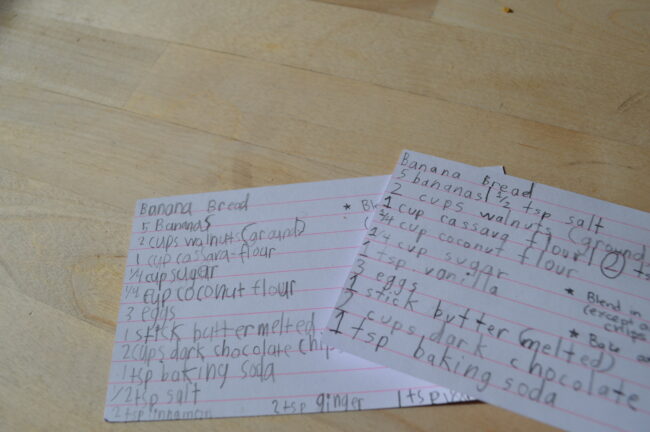
#5) Emphasize the Reading, Writing, Math, and Science. (If you want!)
Cooking with children can be an academic activity. They can practice reading the measurements. (I would recommend double-checking their ability to read fractions and the difference between a tablespoon and a teaspoon, however! 1/2 teaspoon of baking soda being misread as 2 tablespoons could be a pretty dramatic misreading.) The kids can write the recipe out on an index card for handwriting/copy work (and creating their own recipe box). You can work on fractions and addition (especially if you are doubling the recipe). You can talk about chemical reactions with baking soda and yeast. Cooking can be a morning of homeschool (even if, like us, you don’t technically homeschool!). Or not. Remember, you are in charge, and sometimes just letting them do the fun parts and then running off to let you have some peace and quiet is ok too.
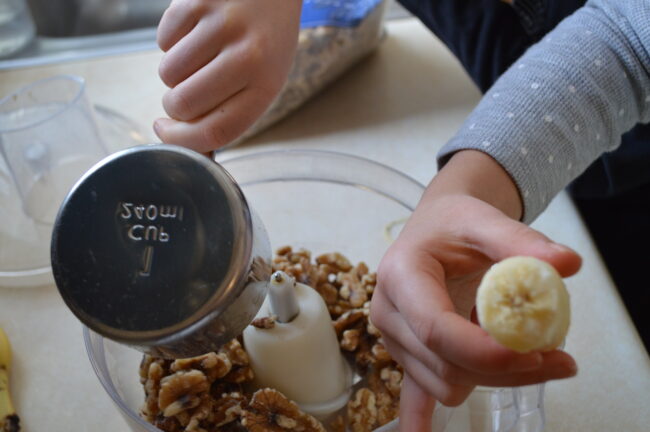
#6) Have the right tools available.
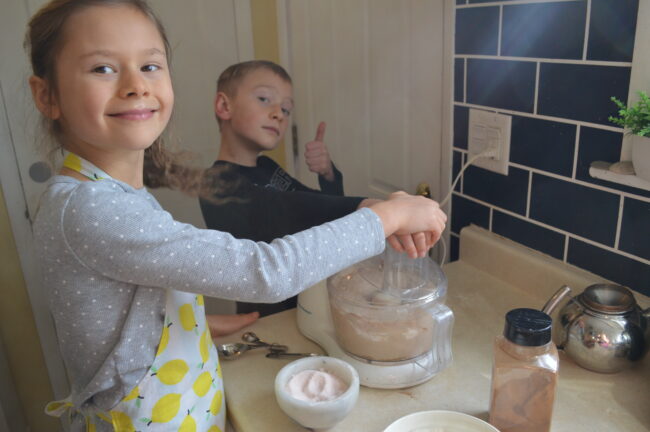
Kids love a special tool: step stools, aprons, spatulas, measuring spoons and cups. If you can manage to keep these things where kids can reach them on their own, even better. We tend to use an 8-cup food processor instead of a mixer because we use ground nuts a lot, so it obviously requires a good amount of supervision (as do knives, stoves, and ovens). But kids love to have their own aprons and a step stool that helps them be at the right height. Don’t try to have the kids share one–at least my children cannot handle sharing a step stool for more than a minute. (Obviously, children continue to grow taller, so what worked well one year may be too tall the next.)
#7) Create Little Rituals
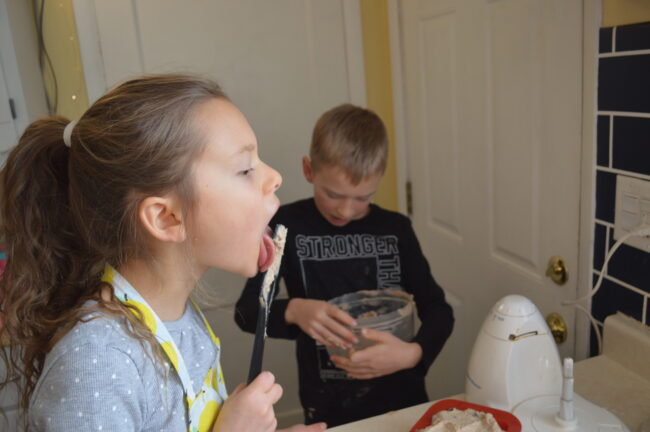
The most obvious rituals are washing hands (great for food-safety) and licking the spatula (not as great for salmonella prevention, but delicious). But you can do other fun things, like listening to certain kinds of music. I once read in a book about a mom who always put vanilla extract behind her daughter’s ear (It was a Rainbow Rowell book, a great book, but not a book for children!), and so now that’s part of our cooking routine if we use vanilla.
#8) Slowly Let Your Kids Do More Over Time.
The goal is to have children who know how to cook delicious, nutritious food for themselves and those they love by the time they move out, or at least to have the skill base to learn to do so as young adults. We are all still learning how to cook! Every few years, I have something that makes me feel like I’m learning all over again. (A change in diet, a new stove, tiny children, growing children, crazy expensive eggs or beef, etc.). One way to help kids be more involved is to have a few cookbooks around (or check them out from the library), where you’d pretty much say “yes” to any recipe. Since our kids are both gluten-free and Lily is pretty much dairy-free (butter and whey powder are ok, so it’s probably a lactose issue), we like paleo books. Our kids love Eat Like A Dinosaur. Then we have to walk through the process from picking out a recipe, to shopping for special ingredients, to planning a time to make it. And even though they always pick out the dessert recipes, it’s still laying the foundation for a lifetime of healthy eating, because cooking at home is one of the healthiest things you can do.
Walnut, Ginger & Chocolate Banana Bread Recipe
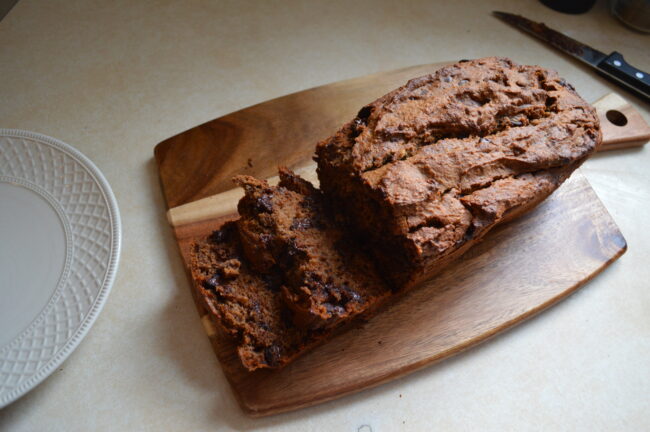
Ingredients
- 5 bananas (ripe, peeled)
- 2 cups walnuts (ground)
- 1 cup cassava flour
- 1/4 cup coconut flour
- 1/4 cup sugar
- 1 tsp vanilla
- 1 stick butter (melted)
- 1 tsp baking soda
- 1/2 tsp salt
- 2 tsp cinnamon
- 2 tsp ginger
- 2 cups dark chocolate chips
Directions
Grind walnuts in a food processor. Add all other ingredients except the chocolate chips into the food processor. Run the food processor until smooth. Add chocolate chips and pulse a few times, or remove the blade and stir the chocolate chips in by hand.
Bake in a loaf pan at 350 degrees Fahrenheit until a knife comes out clean (30 to 45 minutes)
Other Resources for Cooking with Kids: CakeByCourtney, SimpleBits, BakingwithZing, ChowHound
Calfresh, BostonParentsPaper, PBS, Miraculove, TheKavanaughReport.com, & MagicalMovementCo,
What are your tips and tricks for cooking with children?
Fun story and great tips as well as pictures! It reminded me of cooking experiences with my children who now both love to cook as adult men!
Yay. Kim! I hope that I can say that about my kids someday!