
Teaching your children the basics of reading, writing, and math, whether they go to school or stay at home, is one of the great joys (and frustrations!) of parenting. Now that both of my children are 7 and 10 and can happily sit and (1) read silently for an hour at a time, (2) write and illustrate a thoughtful birthday card (Lily’s spelling will be “creative” and Jackson’s will be better than mine), and (3) add up their positive and negative points in most board games, it seems like a good time to talk about what we did to get here.
Hopefully, I am just removed enough to be fairly relaxed about the process. Now I can see how many things contributed to my children acquiring these skills slowly over time. But I’m close enough to recall fondly how wonderful it is to see a child learn to count precisely and just how many skills have to come together for that to happen.
There is a tendency for parents of older children to smile and shake their heads at exuberant first-time parents whose oldest is three and say, “Oh, just read them some books, go to the park, play with blocks, sing songs, and color.” And there is a lot of truth in that. (Or perhaps I am just becoming one of those older kid parents!)
But there is also a deep joy in helping your child master a skill at just the right time. So before I forget, here are the notes I’ve kept along the way of what we did to support the 3 Rs–reading, writing, and ‘rithimatic with our two kids when they were small.
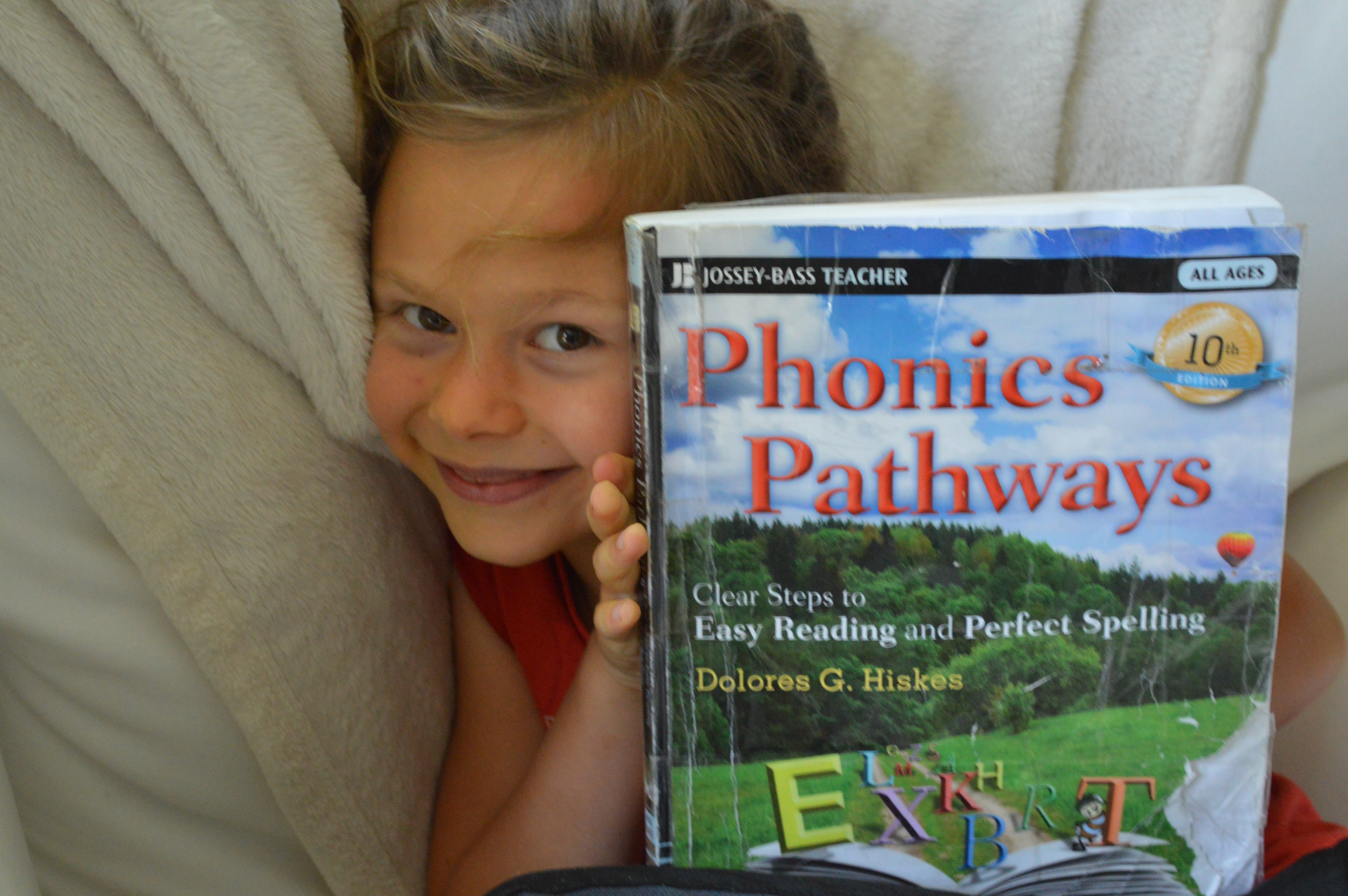
**If you are on a very tight budget, my top three recommendations would be Phonics Pathways, Handwriting without Tears, and Teach Your 3-7 Year Old Math .
Reading/Phonics
After reading aloud to your child (see these lists for some of my very best recommendations for books for each age), the best thing you can do is to teach your child the letter SOUNDS of lower-case letters. (Most people teach their children the upper case letter names, but lower case sounds are what they need to read!) Below are my favorite resources for each age.
Age 3: skill: identifying 26 letter sounds: Montessori: Letter Work Board book by Bobby and June George. This inexpensive sandpaper alphabet board book is arranged by the way the lowercase letters are formed, cueing you to read the sounds aloud. (ex “This is “duh” as in dog.)
Age 4: skill: identifying 26 letter sounds and constant digraphs (ie. ch and th): Doodling Dragons, Whistling Whales, and Knitting Knights by Denise Eide (especially with the audio files). You can listen to the albums on youtube, although I found owning the albums to be worth skipping all the ads!
Age 5: skill: blending letter sounds and constant digraphs: Phonics Pathways: Clear Steps to Reading and Perfect Spelling by Dolores G. Hiskes (All About Reading or Logic of English full programs are great too, but much more expensive!). Phonics Pathways is my absolute favorite resource. If you only purchase one thing to help your child read, it should be Phonics Pathways.
Age 6: Phonics Readers: skill: long vowels, vowel digraphs, and r-controlled vowels BOB Books (sets 1-5), All About Reading Readers (Bug Run Bug, The Runt Pig, Cobweb the Cat), Teacher Created Materials: Targeted Phonics by Sharon Coan (A Nap), Dandelion Launchers by Tamar Reis-Frankfort and Wendy Tweedie (Meg and Ted) (For more decodable readers and my thoughts on the importance of phonics, see this post)
Adult Reading on Phonics: Uncovering the Logic of English: A Common-Sense Approach to Reading, Spelling, and Literacy by Denise Eide & Podcast series: Sold a Story.

Writing
Learning to write is a matter of practice, a good pencil grip, and knowledge of how to form the letters. Drawing and other forms of art are critical for writing development. I found that having a standard way to describe to a child how to form a particular letter was very helpful. We used Handwriting without Tears (here’s a chart) and still refer to “magic c” letters! The other major thing is to continue to correct your child’s pencil grip! (For pencil grip, we like to talk about “Ally the Alligator“)
Age 2: skill: controlled scribbling: (parent read) First Art for Toddlers and Twos: Open-Ended Art Experiences by MaryAnn F. Kohl. Sketch Pad & Jumbo Crayons and LCD writing tablet. A sketch pad, crayons, and an LCD writing tablet are really gifts that most children of nearly any age appreciate! The nice thing about the jumbo crayons is they are harder to break, but some occupational therapists think the standard size crayons and pencils are better for learning the right pencil grip.
Age 3: skill: lines & patterns Wipe Clean Workbook Tracing and Pen Control by Roger Priddy medium dry erase marker & pencil grip
Age 4: skill: shapes & tracing: Wipe Clean Workbook Lowercase Alphabet by Roger Priddy & A First Maze book / Scissors Book & sturdy #2 pencils and pencil grips.
Age 5: skill: pictures & letters: First Letter Practice Books. (ex. Handwriting without Tears, Kumon Lowercase Letters, My First Learn-to-Write Workbook or if they are more advanced Writing Without Tears Kick Start Kindergarten etc) & Handwriting Paper Writing Tablet (1 inch) and standard width pencils and pencil grips.
Age 6: skill: words & copy work: Draw, Write Now by Kim Stitzer and Marie Hablitzel & Penmanship Paper (Grade 1: 5/8 inch, Grade 2: 1/2 inch, Grade 3: 3/8 inch or graph paper or lined stencil) and Drawing with Children by Mona Brookes. Continue with Writing Without Tears series.

Math
Math in the youngest years is largely based on counting and number recognition. Can your child count aloud? Can they accurately count things in real life and on a page? Can they read a number? Can they count backwards? Can they skip count? I found reading Teach Your 3-7 Year Old Math by John Bowman so helpful to shape our everyday interactions.
Age 2: skill: names and order of numbers: Duplo Legos & A Bunch of Counting Board Books from the library.
Age 3: skill: precise counting : (parent read) Preschool Math at Home: Simple Activities to Build the Best Possible Foundation for Your Child by Kate Snow & Montessori: Number Work by Bobby and June George, and more counting books from the library. Count lots of things! (You can buys special things to count like pompoms, balance bears, Montessori beads but things around you house or other toys can work just as well)
Age 4: Skill: Subitizing, comparing & written numeral recognition : (parent read) Teach Your 3-7 Year Old Math by John Bowman & Montessori 100 number board & Ten Frame.
Age 5: Skill: Beginning basic adding & subtracting: Unifix Cubes & Kumon Work Books & IXL. We did a lot of skip counting and asking basic math questions on walks (stopping to use sticks or leaves if need be). I’d highly recommend “blast off counting” i.e. counting backwards like a rocket ship. Subtraction is much easier if you are confident in backwards counting.
Age 6: Skill: Addition and Subtraction: After child is fluent reader: Life of Fred Math by Stanley F. Schmidt (supplemental program) or Singapore Math, Math with Confidence, or Beast Academy (for full program). Fraction equivalency blocks are something we continue to pull out every six months even into 4th and 5th grade. Continue with Kumon Work Books & IXL.
General Overview (Adult Reads)
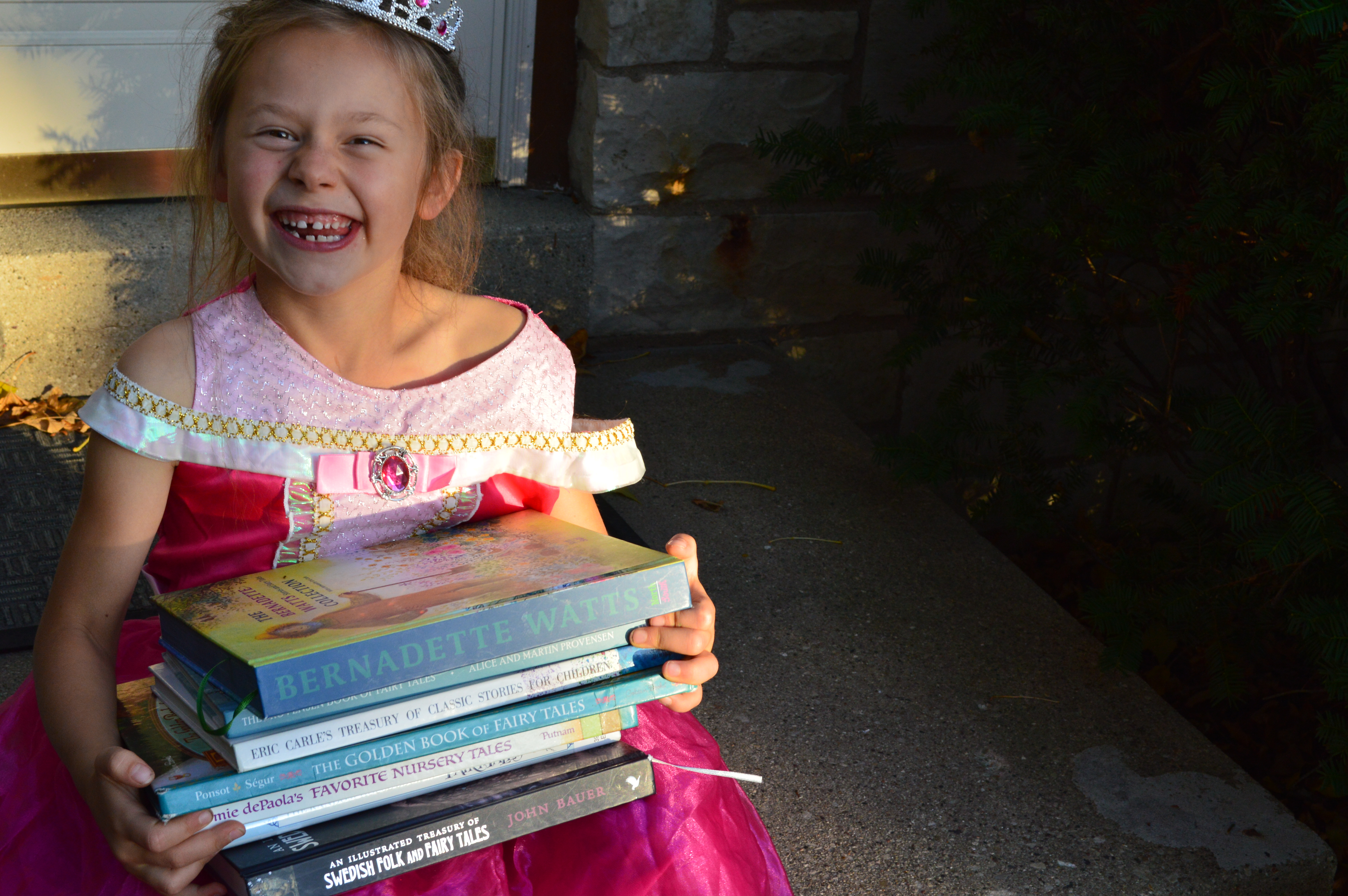
- The Three R’s by Ruth Beechick. Very encouraging that you can teach your child what kids generally need to learn until 3rd grade without any special materials outside of paper, pencil, and a library card.
- The Well-Trained Mind: A Guide to Classical Education at Home by Susan Wise Bauer and Jessie Wise. A wealth of resources and general encouragement for parents of littles to relax, read a lot, and have fun and leave the serious formal schooling until later.
- Preschool Math at Home: Simple Activities to Build the Best Possible Foundation for Your Child by Kate Snow
- Teach Your 3-7 Year Old Math by John Bowman
- Drawing with Children by Mona Brookes
- First Art for Toddlers and Twos: Open-Ended Art Experiences by MaryAnn F. Kohl
- Uncovering the Logic of English: A Common-Sense Approach to Reading, Spelling, and Literacy by Denise Eide & Podcast series: Sold a Story.
What books are resources were key to helping your preschool and kindergarten-age child learn to read or write or add and subtract?